
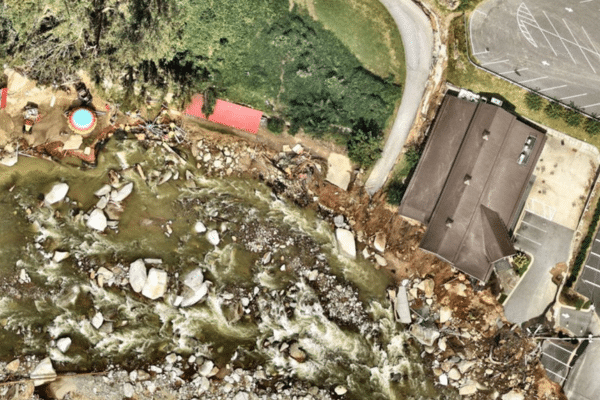
When Hurricane Helene struck the United States in late September 2024, the damage was widespread and severe. Senior living communities were among those deeply affected.
ALG Senior Living has communities in Western North Carolina, an area that saw some of the worst impacts from the storm. ALG’s efforts to support not only its senior living communities but the larger communities around them were far-reaching and required a sophisticated, committed response that remains ongoing. In the immediate aftermath of Helene, ALG evacuated almost 400 people from its communities in the area.
Lindsey Duch, vice president of health policy for ALG Senior Living, helped to lead ALG’s efforts. In an interview with Senior Living Executive, she shared some of the sternest challenges the company faced during the disaster and some of the enduring lessons that she would share with her colleagues in the industry.
Q: As the storm approached, what were some of the key steps your team took to prepare for its arrival?
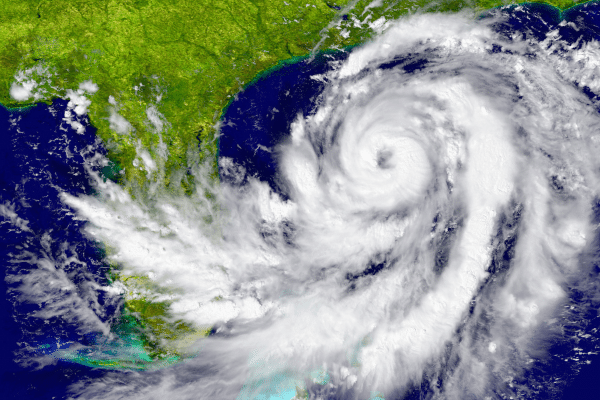
We set up a triage room and worked to get supplies to the buildings that we thought might be affected. We have this process that we go through when a weather event happens at a building. We try to get a couple days supply of extra medications, a couple extra days supply of food. We make sure the generators have gas. Those kinds of things. So we went through that process, and then we delivered satellite phones to the buildings in case the power went out, and they couldn’t charge their cell phones. We didn’t know if this was going to be a one-day event or something else. Of course, no one foresaw the event we ended up having.
Q: How wide-reaching was the impact on your organization?
We had seven buildings affected. For one of the buildings, it took us almost 34 hours to have any communication with it. We flew a helicopter up to Yancey – it was our community Yancey House – and it was one of those moments where you’re like, “Okay, we’re either getting ready to come out and everything’s fine, or we’re gonna fly up and there’s not going to be a building there anymore.” We had no idea.
Then we have another building that’s right next to a lake, The Landings of Lake Lure, and they were completely cut off. We had to airlift them out of the building. We ultimately had three buildings that we had to evacuate and airlift the residents out of with helicopters. We sent up nurses with them and helped transport these people out. That was a big coordination effort. Our greatest challenge was the unknown. Waiting to hear from a building is an experience I hope to never have again. You’re up for 24 hours, just hoping that that cell phone is going to ring, and it’s just nothing.
It’s hard to describe just how devastated the area was and how hard it was to even reach some areas. One afternoon, we were flying in a helicopter going to check on a building, and we dropped in at a fire station. And the neighboring town to the fire station is called Frank, and on a normal day, it’s 5 or 10 minutes away from where we had landed. We were trying to get a sense from the emergency responders about what they might need and how we could help. What we could bring them. And one of them said, “I need to know how Frank is.” I said, “What are you talking about?” He goes, “We can’t get a hold of anybody from Frank, and all the roads are shut down – the roads are gone.” So we popped up in the helicopter, flew half a minute, dropped down, and Frank was fine. Frank was in the same condition. So we picked up and came back and let them know at the fire station. It was just surreal. They couldn’t get five minutes up the road, and they couldn’t even get in touch with them. It was incredible.
Q: How did you manage the decision-making in such a large-scale crisis, especially with the unpredictability of it and the many unknowns you faced?
Everything is on this grand scale with a storm of that magnitude and the response to it, and you can get sucked into that. So we would have these little team meetings every morning where we would say, “Okay, we have to fix what we can fix today.” We knew, of course, that that was going to change with every hour, and then it was going to be a completely separate set of things to also fix, so we had to be ready to adapt while keeping calm – all while recognizing the urgency of what we were doing. We had to move fast, but we couldn’t let the rush of everything having to happen immediately keep us from thinking about what we were doing and saying, “What are we going to do today? What are our goals right now?”
We were very diligent about keeping a calm composure because everyone around you is going to feed off that. And hearing from the communities and what they were going through, we were always trying to find out what they needed and understand what they were dealing with and trying to figure out how we could best help them. Their emotions were understandably incredibly high. They have these humans that they’re responsible for, and no power, no water, no food, and they can see water rising. So hearing them, validating how they were feeling and what they were experiencing, and assuring them that we are coming was very important. I also wanted to make sure they felt empowered to tell me what they needed. Asking them, “What do you need? What do you want me to do? You tell me what you want me to do, because I’m not there and I don’t know as well as you do.” I was very proud of the way all our team members handled things. We had people who had never faced the kinds of decisions they were facing, and they stepped up to that.
Q: I understand that you were able to share your facilities with the local communities that were affected.
We evacuated three buildings, and then two buildings weren’t open yet, so they didn’t have any residents, but there were staff there – they were just in that new building stage. We used all five of those locations as community hubs, and every week we would send up pallets of water, diapers, wipes, food, fresh produce, blankets, heating sources, over-the-counter care. Because the pharmacies had shut down, if we could work with the provider network to get the prescription, we would bring the prescriptions up. Then the community members who were either displaced and living in an American Red Cross shelter before they determined what they were going to do for housing, or they were living in a tent inside their house, or they were living in an RV, they would come get supplies and take it back to where they were. And by November, I started working with a couple of other nonprofits to help find housing solutions for families with either children or seniors in the same household, and we were able to house families and seniors who really just could not stay where they were. We were able to become a resource for these towns.
Q: What kind of challenges did you face in the weeks and months after the initial challenges that resulted from the storm?
The greatest long-term challenge was water. Getting the buildings that we had evacuated shored up with the water and sewer took almost four months. Most of the buildings that we have have well water, but it was the sewer system that was the problem. The city didn’t know where the sewer water was going.
There was definitely a push and pull to being an advocate for getting people home but also wanting to keep them safe. Because we know our seniors will thrive better when they’re at home, and the staff will thrive better when they have their people back. Sitting in an empty building is very disheartening for the staff, who were kind of just living there, helping maintain the building. When you walk through people’s rooms and they’re not there, there’s a disheartening feeling about that. That was a long game of wait-and-see – a lot of hurry up and wait. Fortunately, by Christmas, everyone was back home in their buildings.
Even after the buildings opened back up and the people were back in, the towns around them weren’t fully open. So they were still isolated. We had staff having problems coming in and out to work because of the road conditions or their car was messed up because it was flooded. So it was an ever-unfolding problem for many months after the hurricane. So, for us, we worked to find ways to work with the counties and towns to help be an advocate for them, using our wherewithal and what influence we may have to get them the resources they need to reopen. Because I can’t take care of seniors if they don’t have a community to take care of them, too. So being an advocate for these communities in any way that we can has been our focus in the long term.
Q: How important was supporting your team members during this crisis, especially because their personal lives were so uprooted by what happened?
It’s about being flexible and caring. That gives you the energy and the love and the drive to make this more than a job. We’re in the business of caring for people, and you can’t care for a resident if your staff isn’t cared for either. So you take the time and effort to do it. It’s so important to invest in your staff and give them the time off that they need to put their life back together.
When we got off the helicopter at Yancey that first time and found that everyone was OK, we were all just deliriously happy. They were just so cut off. And I pulled the executive director aside and I said, “How are you doing?” And she was like, “Oh, I’m good. I’m good. We’re working through it.” And I said, “No, I mean, how are you doing? How’s your family? How is your house?” She said, “My house is there. My road is gone, and my neighbors are gone.” And then she just started crying. And that’s when you just listen. You hear her story and her experience and then just invest in her. She didn’t think that she could bring her family to the building to stay. She didn’t want to take advantage of the building. I said, “You’re living here in a room that’s offline. We’re obviously not moving anyone else into this building, and we’re probably moving everyone out soon. Bring your family here where there’s a generator. Your family doesn’t need to live in the dark when they can live here.”
At another building, a staff member had moved in with her husband while the building was evacuated, and I drove up sometime in early October, and she was just crying, and I said, “What can I do? Tell me what you need from me.” She said, “I just need a hot meal. I would just love a hot meal.” Her car had flooded, so I gave her my car and she left and found one.
We started a needs portal for our staff members. We wanted them to let us know what they needed, whether it was housing or a car or a hearing aid for their daughter, which is something we actually helped with. That was the biggest and honestly most fulfilling thing that we were able to do is fix what we could fix for our people. They want to do a good job, and they are trying their best, but they were living through so much. I got to go home every night and turn my lights on. These people drive home and it’s a disaster. It was important we always had that perspective.
Q: Are there any other lessons from this experience that you’d share?
I would say that we do a very good job at planning for a crisis. We try to prep and plan as much as we can, but there is no planning for every crisis and you don’t have to be disappointed that you didn’t see it coming. You can do all the postmortem analysis of how did we do and what could we have done better, but when you make decisions that quickly, for that many days, sometimes it’s not going to be the best decision, and you’re going to look back in there, and say, “Okay, well, we should have done this.” You can learn from it and decide how you could do better, but there are only so many perfect decisions you’re going to make. Give yourself some grace and keep doing your best.
The Key Is Being Prepared
In today’s unpredictable world, being prepared for emergencies is more crucial than ever. Our comprehensive Emergency Preparedness whitepaper offers invaluable insights and practical strategies to ensure your organization is ready to handle any crisis. From detailed risk assessments to step-by-step response plans, this whitepaper is an essential resource for safeguarding your community and maintaining operational continuity. Don’t wait until it’s too late—download your free copy today and take the first step towards a safer, more resilient future.
Add Your Voice Before September 8
The Quality in Assisted Living Collaborative (QALC) has taken an important step toward strengthening resident safety and operational readiness in assisted living communities with the release of proposed Emergency Preparedness Guidelines. Now open for a 45-day public comment period, this draft is not only a framework for improvement—it’s an invitation. By engaging a broad base of providers, policymakers, regulators, and advocates, QALC aims to ensure these guidelines reflect both the evolving landscape of senior living and the diverse operational realities of providers across the country.
This is a unique opportunity for stakeholders across senior living to help build a more resilient future. Whether you’re an executive director, an operations leader, a nurse, an emergency planner, a policymaker, or an advocate, your perspective matters. By participating in the comment period, you help ensure the guidelines are not only sound on paper, but also workable in practice.
The full proposed guidelines and comment form are available now. Download the Guidelines here. Submit your feedback by September 8 using this online form.