
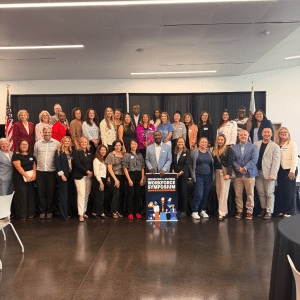
Senior living employers, educators, workforce-development professionals and regional partners gathered in Los Angeles for two days of collaboration focused on strengthening the industry’s workforce pipeline and creating clearer pathways into senior living careers.
The Argentum Workforce Symposium—Los Angeles took place June 25 at Los Angeles Trade-Technical College, followed by a Job Corps Career Fair on June 26 at the Los Angeles Job Corps Center.
Hosted in collaboration with the California Assisted Living Association, Los Angeles Trade-Technical College, ACG Training, Management & Consulting, Job Corps and other regional partners, the symposium was designed to move beyond a traditional conference format.
Rather than spending the day simply discussing workforce shortages, participants worked together to identify challenges, explore potential partnerships and begin designing practical solutions.
The symposium brought together organizations that each play an important role in developing the senior living workforce.
Senior living providers contributed insight into the positions they need to fill, the skills those positions require and the qualities that help employees succeed in community settings. Colleges and training organizations shared their expertise in preparing students for careers, while workforce boards, America’s Job Centers of California, Job Corps representatives and economic-development leaders offered perspectives on talent recruitment, supportive services, workforce funding and regional labor-market needs.
Throughout the event, participants explored how these organizations can work more closely to introduce new audiences to senior living, align training with employer needs and create pathways that support entry, advancement and long-term career growth.
The conversations also highlighted the breadth of careers available within senior living. In addition to caregiving and nursing, communities rely on culinary professionals, maintenance technicians, housekeepers, sales teams, administrative employees, technology professionals, activity leaders, operations teams and executive leaders.
By bringing employers and workforce partners into the same room, the symposium provided an opportunity for both groups to better understand one another’s needs and identify areas where stronger collaboration could make a meaningful difference.
Examining the Workforce Challenge
The June 25 program began with breakfast, networking and opening remarks from Los Angeles Trade-Technical College leadership. James Balda provided an introduction to the senior living industry before David Eskenazy, chair of the California Assisted Living Association Board of Directors and vice chair of the Cogir Management USA Board of Directors, discussed the workforce challenges facing California.
Lorene Bower, director of training and development for Oakmont Management Group, helped ground the conversation in the realities facing senior living providers, including current hiring demand, persistent talent gaps and the range of opportunities available across the profession.
The multidisciplinary panel, “Develop Your Talent Pipeline: What Actually Works. What Must Change?”, brought together perspectives from senior living, higher education, workforce development and government.
Moderated by David London, president and CEO of ACG Training, Management & Consulting, the discussion featured:
- Dr. Mechelle Best of California State University, Northridge
- Jim Biggs, CEO of Momentum Senior Living
- Chris Cagle of the South Bay Workforce Investment Board
- Jessica Daugherty of Cause Impact
- Bryson Gauff, workforce representative for the Los Angeles Mayor’s Office
- Dr. Jim Lancaster of the Los Angeles Community College District
- Ruth Patterson, consultant to Argentum
Panelists and participants examined labor-market trends, demographic changes, workforce shortages and the economic importance of senior living. The discussion helped identify priority occupations, talent populations and workforce barriers that could become the focus of future partnerships and pilot programs.
Turning Discussion Into Potential Solutions
The afternoon shifted from information sharing to collaborative solution building. During a series of Breakout Design Labs, participants divided into working groups focused on four critical areas:
- Entry-level workforce challenges
- Apprenticeship solutions
- Employer engagement and workforce alignment
- Education and workforce partnerships
Teams worked to develop preliminary pilot concepts, identify prospective partners, consider possible timelines and explore funding resources that could help move their ideas forward. Each group outlined the workforce problem it hoped to address, the population it intended to reach, the organizations that would need to participate and the initial steps required to advance the concept. The teams then presented their ideas to the larger group for discussion and prioritization. The process was intended to identify the concepts with the greatest potential for continued development and, ultimately, implementation as sustainable workforce initiatives.
The day concluded with a shared commitment from Argentum, CALA, Los Angeles Trade-Technical College, ACG Training, Management & Consulting and participating partners to maintain momentum through continued communication and follow-up. That emphasis on follow-through was a defining element of the symposium. The goal was not simply to generate enthusiasm during the event, but to create a foundation for continued collaboration and give promising ideas an opportunity to develop into working programs.
Connecting Employers With Emerging Talent
The experience continued June 26 at the Los Angeles Job Corps Center, where senior living employers learned more about Job Corps and its role in preparing young adults for the workforce. Employers then met directly with Job Corps students during a career fair, followed by lunch, interviews and opportunities to tour the center. The career fair gave participating organizations an opportunity to introduce students to the wide range of roles available in senior living and challenge common assumptions about what a career in the profession can look like.
For students, the event offered direct access to employers and a chance to learn about meaningful career opportunities in a growing field. For senior living providers, it provided an opportunity to meet prospective employees who are actively developing workplace skills and preparing to enter the labor market. The experience demonstrated what a stronger talent pipeline can look like in practice: workforce organizations preparing and supporting job seekers, employers communicating their needs and career opportunities, and both groups working together to create clearer bridges between training and employment.
Building Pathways, Not Just Filling Positions
One of the central messages to emerge from the symposium was that building a sustainable senior living workforce requires more than recruiting people to fill immediate vacancies. It begins with awareness. Students, young adults, career changers and job seekers must understand that senior living offers meaningful work and a wide variety of professional opportunities. It requires access. Prospective employees need clear entry points, relevant education and training, and support in overcoming barriers that may prevent them from entering the field. It also requires advancement. Employees are more likely to build lasting careers in senior living when they can see opportunities to gain credentials, develop new skills, assume greater responsibility and move into leadership positions.
Most importantly, it requires partnership. Employers cannot build comprehensive workforce systems alone. Colleges, workforce boards, Job Corps centers, apprenticeship programs, training providers and government partners can help senior living organizations reach new talent populations and develop stronger connections between education and employment. Senior living employers, in turn, can help ensure that training programs reflect real workplace needs and lead to genuine career opportunities.
The Los Angeles Workforce Symposium created a forum for those partners to begin building those connections, aligning their efforts and turning shared workforce challenges into shared action. As the industry looks toward the future, the relationships and ideas developed in Los Angeles represent an important step toward creating a stronger, more accessible and more sustainable senior living workforce.