
Inside a Bristol, CT community tour on October 1 and the policy fixes that could help more residents stay where they desire
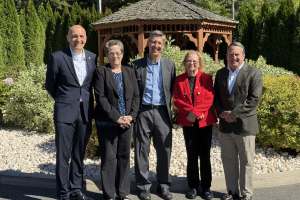 On Wednesday, October 1, state lawmakers in Connecticut toured the Shady Oaks assisted living community in Bristol to see firsthand how the state’s Connecticut Home Care Program for the Elderly (CHCPE) supports older adults who want to remain in assisted living rather than enter a nursing home. The conversation centered on a lesser-known option within CHCPE, the Private Assisted Living Pilot Program, and how small adjustments could unlock big savings for taxpayers while preserving dignity and choice for residents.
Lawmakers included Vice Chair of the Connecticut House Committee on Aging Mary Fortier, Connecticut House Deputy Majority Speaker Mike Demicco, and Chair of the Connecticut House Committee on Aging Joan Garibay. They were joined by Tyson Belanger Owner & Director Shady Oaks Assisted Living, and Chris Carter, President of Connecticut Assisted Living Association.
The promise, and shortfall, of the Pilot Program
The Pilot Program was launched to help lower-asset seniors (generally under ~$50,000) afford assisted living by providing up to roughly $2,900 per month toward licensed services, with participation limited to 125 seniors across fewer than 35 assisted living communities. The intent is sound: light, earlier support in assisted living can avert far costlier Medicaid nursing home placement later. But participation has slipped in recent years, and the current aid level often isn’t enough to bridge the gap for residents who outlive their savings.
Two cases underscore the stakes:
- A lower-needs resident paying $7,400/month received $2,300/month through the Pilot but ultimately ran out of funds and had to leave against her wishes; Medicaid now pays $10,372/month for her nursing home care.
- A higher-needs resident on hospice with dementia, paying $8,300/month and receiving the full ~$2,900/month Pilot support, also ran out of funds after six years in assisted living and had to transfer; Medicaid now pays $10,230/month in the nursing home.
These stories are not outliers; they reflect a structural mismatch between assistance levels and real assisted living costs.
What better looks like (here and elsewhere)
As discussed on the tour, Pilot aid is “unfair and insufficient” compared with other CHCPE pathways and with other states:
- Under CHCPE, a senior living at home with a live-in aide can receive over $9,100/month, triple the assisted living cap. Other states go further for assisted living: Minnesota up to ~$6,000/month; Ohio up to ~$4,700/month.
- Connecticut also runs a small Assisted Living Demonstration Project that helps with both care and housing, a more complete solution, but it’s capped to just four sites located in Seymour, Glastonbury, Hartford, and Middletown, leaving regions like Bristol without access.
Three practical fixes raised with state leaders
- Increase assisted living aid within the Pilot. DSS representatives indicated they can boost Pilot support administratively, no statute change required, following a public hearing. That would immediately reduce involuntary moves to nursing homes and align incentives with cost-effective care.
- Expand the Demonstration Project beyond four locations. Adding two or three geographically representative assisted living communities (including in the Bristol area) would spread access to the “care + housing” model. DSS voiced support for adding sites, with the Department of Housing to lead.
- Study CHCPE outcomes and update the public. Historical DSS reporting suggests CHCPE helped Connecticut avoid roughly $2.5 billion in costs from 2006–2019 by preventing or delaying nursing home Medicaid. DSS signaled plans to study the Pilot, though no timeline has been shared; publishing refreshed results would sharpen decisions on where aid delivers the highest return.
The bottom line
The October 1 visit made the math visible: a modest bump in assisted living support can prevent forced moves, preserve resident choice, and lower Medicaid spending. In policy terms, this is low-friction, high-impact. In human terms, it means staying home in a familiar community.
Keep the momentum going: Host a community tour
Seeing is believing. If you want to invite local lawmakers or stakeholders into your community, use Argentum’s Community Tour Toolkit which includes email templates, checklists, and talking points to make your visit turnkey and effective. Start here.