

As of January 28, 2026, frightful doesn’t even begin to describe the weather outside. With freezing temperatures and a cornucopia of frozen precipitation impacting most of the U.S., people are opting to remain indoors, sharing warmth and infections alike. That makes now a good time to review our respiratory virus situation.
For this update, we’re relying on the Respiratory Illness Data Channel maintained by the U.S. Centers for Disease Control and Prevention (CDC). It’s not Netflix, but it’s free and a great resource for staying informed about respiratory viruses!
Good News!
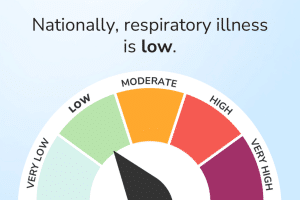 According to CDC, as of January 23, 2026 the amount of acute respiratory illness causing people to seek healthcare is at a low level. Note that this “low” rating is an assessment of the total impact of respiratory illnesses, regardless of which diseases are causing people to get sick. It’s a measure of how frequently respiratory symptoms and conditions – from the common cold to COVID-19, flu, and RSV – are diagnosed by emergency department physicians.
Emergency department visits in the U.S.:
- COVID-19 is low and decreasing
- Flu remains moderate, but decreasing
- RSV remains moderate, but decreasing
Respiratory Virus Activity Levels
As of January 23, CDC’s Respiratory Virus Activity Levels map shows one state (New Hampshire) with high levels of acute respiratory illness, and 13 states with moderate levels.
The breakdown for community viral activity in the U.S. is reported as follows:
- COVID-19 is moderate overall, although there are still pockets of “high” activity
- Flu remains moderate
- RSV is low
Flu Focus
As recent as January 10, CDC was reporting 14 states with “very high” influenza activity, 21 states with “high” activity, and eight states with “moderate” activity. As of January 17 there were seven states with very high activity, 19 states with high activity, so levels are declining in much of the U.S. You can review CDC’s Outpatient Respiratory Illness Activity Map to check the conditions in your state.
As of a few weeks earlier, CDC had estimated there have been at least 15,000,000 flu illnesses, 180,000 hospitalizations, and 7,400 deaths attributable to flu this season.
Vaccination
CDC notes that national vaccination coverage for remains “suboptimal” for children and adults. Lack of demand for vaccination remains an issue, even though vaccination is still considered by the vast majority of health care professionals to be the best source of protection against severe illness from respiratory viruses.
Approximately 130 million doses of flu vaccine have been distributed in the U.S. this season. The current vaccine is reportedly 30-40% effective, but still performing well in preventing serious illness. It’s not too late to get vaccinated and boost protection through the end of the season.
Closing
Respiratory virus season typically spikes shortly after the holiday season, and that has been the case again this year. What remains to be seen is if the current downward trend will continue through the end of the season (March 30), or whether there will be a secondary “late-season surge” such as what was experienced in early March 2024.
Check out the Quality in Assisted Living Collaborative’s Infection Prevention and Control Guidelines for Assisted Living Communities for a refresher on steps you can take to minimize infectious disease issues in your community.