
New research from Argentum and NIC MAP examines why a strong recovery in demand has yet to translate into more senior housing construction.
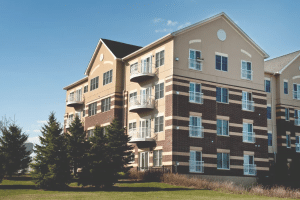 Senior housing communities are fuller than they were before 2020, and the industry has absorbed new and existing units at a record pace. The population that needs senior housing is also growing faster than the inventory available to serve it. Even so, construction starts have fallen every year since 2021.
That disconnect is the focus of Half the Ledger: Why Record Demand Hasn’t Produced Record Development, a joint report released November 17 by Argentum and NIC MAP. Drawing on market-level operating data from NIC MAP’s Financial Benchmarking Initiative, the report examines how revenue, expenses, and local construction costs shape the prospects for new development.
“The demand for senior living is growing, and our industry must be prepared to meet the needs of an aging population,” said James Balda, president and CEO of Argentum. “This report provides important data on the operating pressures affecting new development and helps our industry better understand what it will take to bring additional supply to market.”
What happens when occupancy stabilizes?
Filling vacant units drove much of the recent growth in net operating income, or NOI. Revenue and NOI per unit have moved above their pre-2020 trend baselines, while operating margins remain below their pre-2020 level. As communities approach stabilized occupancy and have fewer vacant units to fill, managing expenses becomes more important to further NOI growth.
Labor accounts for the largest share of the remaining margin gap, and the report shows how differently that pressure is playing out across senior housing. Labor costs have eased as a share of revenue in assisted living in recent years while continuing to rise in independent living. That divergence matters for operators benchmarking their expenses and for lenders and developers using those benchmarks to estimate how a new community might perform.
Where could new development make financial sense?
The report tests how different growth scenarios affect when new projects could earn the returns needed to move forward. In the national models, assisted living generally reaches those thresholds sooner than independent living. The picture varies considerably at the local level, where rents and construction costs can put otherwise similar projects on different timelines. Under the report’s assumptions, some higher-rent markets already support new development, while projects in other markets face a longer path.
“Occupancy gains tell only part of the story,” said Arick Morton, CEO of NIC MAP. “Operators, developers and lenders also need to understand how labor and other expenses affect margins and the returns required to support new construction.”
The full report includes operating benchmarks by property type, development scenarios, and a county-level analysis that shows how the outlook changes when local rents and construction costs are factored in.
Download Half the Ledger: Why Record Demand Hasn’t Produced Record Development.