
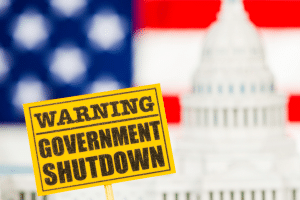
 Lawmakers are back in Washington, D.C. this week with just hours to prevent a government shutdown, which will begin at 12:01 a.m. ET on Wednesday, October 1 unless a continuing resolution (CR) or broader funding agreement is passed and signed into law before that deadline. The House has already passed a CR to fund the government through November 21, while Congressional Democrats are demanding immediate concessions and a CR through October 31.
Democrats are exerting their leverage to extract concessions from Republicans, as 60 votes are needed in the Senate to advance the legislation, meaning at least seven Democrats would need to join with all 53 Republicans. Democrats are seeking to permanently extend enhanced premium tax credits for ACA marketplace insurance plans, to rollback the Medicaid reductions from the One Big Beautiful Bill Act, and restrict the White House from imposing future rescissions to Congressionally-authorized spending.
In response to this, the White House Budget Office advised federal agencies to pursue a “reduction in force” to terminate significant portions of the federal workforce, rather than a temporary furlough if the government is to shut down. Any federal employee who is not funded through mandatory spending or whose programs, projects, or activities are not consistent with the President’s priorities would be terminated. According to OMB, layoffs wouldn’t apply to Social Security, Medicare, veterans benefits, or other essential agencies.
As a reminder, if there is a government shutdown, impacts to seniors and senior living communities include:
- Social Security: Existing beneficiaries will not be impacted; payments will continue to be issued. New benefit verification and card issuance would be paused.
- Medicare: Beneficiaries will not be impacted; Medicare coverage will continue uninterrupted.
- Medicaid: Beneficiaries will not be impacted; Medicaid coverage, including for Home and Community Based Services, will continue uninterrupted.
- Veterans Affairs: Beneficiaries will continue to receive benefits; new applications for benefits or appeals may be delayed.
- Public Health: CDC and FDA monitoring activities, including for the flu and other infectious diseases, may be limited.
- U.S. Postal Service: Mail, including parcels such as mail-order medications, will continue to be delivered.
- Small Business Administration: The SBA would need to furlough most staff; it would not be able to process applications for loans and loan guarantees.