
July brings longer days, outdoor gatherings, and rising temperatures. It also brings one of the most easily overlooked health risks facing older adults: dehydration.
 In areas where heat advisories and extended stretches of high temperatures are common, proper hydration is not simply a summer wellness recommendation. It is an important part of protecting older adults from dizziness, falls, confusion, urinary tract infections, hospitalization, heat-related illness, and other serious health complications.
For senior living communities, families, and caregivers, the challenge is clear: Do not wait until an older adult says they are thirsty.
Why Older Adults Are More Vulnerable
As people age, the body’s natural thirst response can weaken. An older adult may need fluids but not recognize or communicate that need until dehydration has already begun.
The body may also become less effective at adjusting to sudden temperature changes. Chronic health conditions, mobility limitations, cognitive impairment, and certain medications can further increase an older adult’s vulnerability during hot weather.
Some older adults intentionally drink less because they are concerned about bladder control, difficulty getting to the restroom, or needing assistance. Others may have trouble opening bottles, lifting cups, swallowing, or remembering to drink throughout the day.
The result can be a dangerous combination: rising temperatures, increased fluid loss, and fewer internal cues encouraging the person to replenish those fluids.
Making Hydration Part of the Daily Routine
The most effective hydration strategies are proactive rather than reactive. Instead of relying on occasional reminders, senior living communities can make drinks and water-rich foods an easy, appealing, and expected part of each day.
At Civitas Senior Living, proactive hydration practices are built into residents’ daily routines throughout the year and receive added attention during the summer months.
Hospitality stations are kept stocked and accessible across Civitas communities, giving residents convenient opportunities to drink throughout the day. Culinary teams also incorporate water-rich foods into restaurant dining, while team members are trained to recognize and respond to early signs of fluid loss.
“Hydration shouldn’t be seasonal, but a daily standard of care,” said Bobby Lane, chief wellness officer at Civitas Senior Living. “Our culinary and wellness teams work together to make sure residents have every resource they need to stay well through the summer months and beyond.”
That collaboration is important. Hydration should not be viewed as the responsibility of one department or one caregiver. Dining, wellness, clinical, life enrichment, housekeeping, transportation, and maintenance teams may all be in positions to notice changes in a resident’s routine or condition.
A server may notice that a resident has stopped drinking during meals. A housekeeper may see that a water glass has remained untouched. A life enrichment professional may recognize that a normally engaged resident suddenly appears tired, dizzy, or confused.
When hydration becomes part of the overall culture of a community, warning signs are more likely to be noticed early.
Hydration Does Not Have to Be Boring
Water is often the simplest and most accessible hydration choice, but it does not have to be the only option. Residents may be more likely to drink regularly when beverages reflect their preferences and are incorporated naturally into meals, activities, and social gatherings.
Communities and families can consider offering:
- Water infused with berries, citrus, cucumber, or mint
- Flavored or sparkling water
- Milk, juice, or other preferred beverages when medically appropriate
- Smoothies and frozen fruit treats
- Ice pops
- Gelatin, yogurt, soups, and broths
- Water-rich fruits and vegetables such as watermelon, berries, peaches, cucumbers, tomatoes, and oranges
Beverages should be easy to see, reach, open, hold, and drink. Refillable cups, bottles with large handles, straws, and lightweight containers may help residents with limited strength or dexterity. Offering smaller amounts more frequently can also feel less overwhelming than placing one large container in front of someone and expecting it to be finished.
Recognizing the Early Warning Signs
Dehydration does not always present dramatically. Its early signs can be subtle and may be mistaken for fatigue, medication side effects, cognitive decline, or the normal effects of aging. Possible warning signs include:
- Dry or sticky mouth
- Dark-colored urine
- Urinating less frequently than usual
- Headache
- Muscle cramps
- Dizziness or lightheadedness
- Unusual tiredness or weakness
- Rapid heartbeat
- Increased confusion
- Changes in behavior or alertness
A sudden change in mental status should never be dismissed as “just aging.” New confusion, fainting, unusual sleepiness, an inability to drink, or a significant decrease in urination may require prompt medical attention. Heat exhaustion may include heavy sweating, weakness, nausea, dizziness, headache, rapid breathing, muscle cramps, and a fast but weak pulse.
Without intervention, heat exhaustion can progress to heat stroke, a life-threatening emergency. Warning signs can include a body temperature of 103 degrees Fahrenheit or higher, confusion, loss of consciousness, seizures, hot skin, and a rapid pulse. Emergency medical help should be requested immediately when heat stroke is suspected.
Looking Beyond the Water Glass
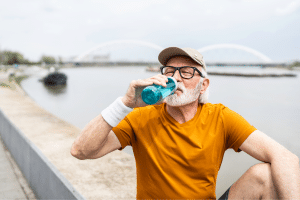 Hydration is only one part of protecting older adults during periods of extreme heat. At Civitas Senior Living, summer wellness education also includes UV safety, guidance on the best times to be outdoors, and information about recognizing symptoms that require immediate action.
That broader approach matters because even a well-hydrated person can experience heat-related illness when spending too much time outdoors, engaging in strenuous activity, wearing inappropriate clothing, or remaining in an inadequately cooled environment. Communities should consider adjusting activity schedules so walks, gardening, exercise, and outdoor events take place during cooler parts of the day. Shaded areas, sunscreen, lightweight clothing, hats, and frequent indoor cooling breaks should also be part of summer planning.
During periods of extreme heat, senior living teams may need to increase wellness checks, confirm that indoor spaces remain at safe temperatures, modify transportation plans, and pay additional attention to residents with cognitive impairment, mobility limitations, chronic medical conditions, or medications that affect hydration and temperature regulation.
Individual Needs Still Matter
Although encouraging hydration is important, there is no universal amount of fluid that is appropriate for every older adult. Some people with heart disease, kidney disease, or other medical conditions may have prescribed fluid restrictions. They should not substantially increase their intake without consulting a qualified healthcare professional.
Communities should work with residents, families, and healthcare providers to develop individualized hydration approaches when needed. These plans may reflect medical requirements, dietary preferences, swallowing ability, mobility, cognitive needs, and the level of assistance a resident requires.
Medication routines should also never be changed solely because temperatures are rising. Families and residents can, however, ask healthcare providers whether particular medications may increase dehydration or heat-related risks and what precautions are appropriate.
Small Steps Can Prevent Serious Consequences
Proper hydration may seem like a simple matter, but its impact can be profound. A stocked hospitality station, a favorite beverage offered during an activity, a meal featuring water-rich foods, or a team member who notices a change in behavior can help prevent a much more serious health emergency.
Civitas Senior Living’s approach offers an important reminder for the entire senior living sector: hydration is most effective when it is not treated as a temporary campaign or a single task completed at mealtime.
It should be accessible, appealing, individualized, and woven into the rhythm of every day. As temperatures rise, and especially in regions where heat advisories have become a regular part of summer, keeping older adults safe requires more than telling them to drink water. It requires a coordinated culture of awareness, hospitality, wellness, and care.
One glass, one nourishing meal, and one thoughtful check-in at a time can make all the difference.
Share How Your Community Is Keeping Residents Cool
Across senior living, communities are finding thoughtful, creative ways to help residents stay comfortable, connected, and hydrated throughout the summer. How are you helping residents stay cool and hydrated this summer? Share your hydration stations, refreshing menus, summer safety tips, indoor activities, frozen treats, team efforts, and resident-favorite ideas using #iloveseniorliving. Your story could inspire another community, and help shine a light on the care, creativity, and heart found throughout senior living every day.
The I Love Senior Living movement celebrates the people, moments, and everyday experiences that make senior living meaningful. In August, the movement will spotlight Ageless Hearts, placing residents and their life stories at the center of the conversation.
In recognition of National Senior Citizens Day on Friday, August 21, communities are encouraged to share resident spotlights, talents, achievements, advice, unexpected adventures, and examples of how people continue growing, contributing, and inspiring at every age. Be sure to include #iloveseniorliving on every post so these stories can be discovered, celebrated, and shared across the movement.
This article is intended for general educational purposes and is not a substitute for medical advice. Individuals with fluid restrictions, chronic health conditions, or concerns about medication and hydration should consult a qualified healthcare provider.