
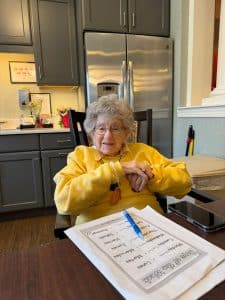
 When Natalie Mueller, activities and volunteer coordinator for the Sunrise of Randolph senior living community in New Jersey heard from residents that they were curious about the Spanish language, she posted a sign-up sheet to measure interest in a class. The response was enthusiastic, and the result is a weekly class that has been embraced by residents.
The Spanish class, which is offered as part of the weekly activity schedule, was created as part of an ongoing effort at Sunrise of Randolph to introduce programs that stimulate the mind while encouraging cultural curiosity and social connection, said Mueller, who noted that Spanish is a widely spoken languages and introducing it helps residents feel connected to other cultures.
“Many of our residents enjoy learning new things and often look for activities that challenge them intellectually,” Mueller said. “Language learning is a wonderful way to exercise the brain while also having fun.”
Caitlin Rogers, vice president of dining and programming services for Sunrise Senior Living, said the Spanish class was a perfect fit for “what Sunrise is all about – creating a lifestyle where residents can live with purpose, stay active and connect to the world around them.”
“Our mission is to support the whole person by championing quality of life for all seniors, and learning a new language is such a powerful way to boost cognitive health, meet new friends, try something different and simply have fun,” Rogers said. “It’s a great example of our culture of lifelong learning and meaningful engagement coming to life in the community.”
Relaxed and engaging
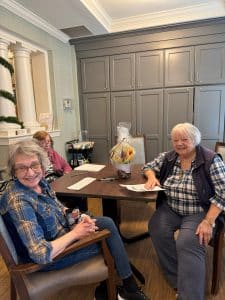 Mueller said a primary consideration for the class was to ensure that it was accessible and enjoyable for residents with different learning styles and cognitive levels. The Sunrise team wanted a welcoming and engaging experience rather than one that felt too academic.
“To achieve this, the class was designed to be interactive and relaxed,” Mueller said. “Instead of focusing heavily on grammar, we emphasize conversation, repetition, visuals and practical situations, such as greetings, travel phrases or ordering food, to make learning both enjoyable and approachable.”
Each class session typically lasts about an hour. Mueller said classes usually include reviewing vocabulary from previous classes, introducing new words or practical phrases, and activities ranging from pronunciation practice to role-playing everyday scenarios, such as ordering food or greeting someone.
Each week, the class session includes a new topic to ensure residents continue building their vocabulary and confidence. Printed worksheets allow residents to practice reading and writing during class, along with homework that helps reinforce the language between sessions.
“We intentionally keep the environment social so residents feel comfortable speaking and trying new words,” Mueller said. “Occasionally we incorporate activities where we speak only in Spanish for a short period of time, which adds a fun challenge and encourages participation.”
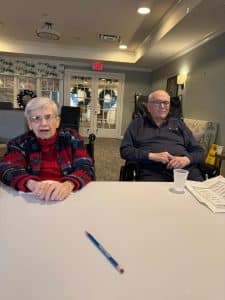 Mueller said the community incorporates real-life experiences into the program, such as organizing outings to restaurants where residents can practice ordering food in Spanish, helping make the language feel “practical, memorable and meaningful.” Short, engaging activities throughout the week help to reinforce the lessons, such as watching movie clips in Spanish or learning the names of the different parts of the body.
Mueller said a notable outcome from the class has been strengthening connections within the community.
“Some of our team members speak Spanish and help residents practice pronunciation, answer questions and support them with simple conversation exercises throughout the day,” Mueller said. “This has created a very collaborative and supportive learning environment within the community.”
In fact, a Spanish social time on Saturdays gives residents a chance to gather informally and practice speaking together and with team members.
“During this time, team members who speak Spanish are available to support residents with their homework or simply enjoy casual conversations in Spanish,” Mueller said. “These moments help residents practice the language in a relaxed and social environment.”
Those who take the class are able to apply what they learn, introducing themselves, talking about their personal lives and sharing simple stories in Spanish. That makes the experience more meaningful, Mueller said.
“It’s especially rewarding to see residents greeting one another in Spanish throughout the community and proudly using the words and phrases they’ve learned,” Mueller said.
A sense of inclusion and belonging
Mueller said Sunrise of Randolph is working to add Spanish books to its community library as part of the effort and hopes to expand the program by introducing Portuguese.
Rogers said a key to the program’s success is meeting residents where they are. Class participants arrive with different comfort levels with the material, so a relaxed, judgment-free environment is necessary, she said. Rogers’ advice to other operators considering starting a class is to start small and make it approachable.
“You don’t need a full academic curriculum to pique an interest and leave residents wanting more,” Rogers said. “Start with conversational phrases, music, simple games or cultural moments that get people participating. And definitely gather feedback early. Residents will tell you what’s working and what’s not. When they feel heard, participation grows naturally.”
Rogers said she loves that the Spanish class brings people together and creates a true sense of inclusion and belonging in the community.
“It’s exciting to watch residents take on the challenge of learning something completely new, especially a very difficult skill like learning a foreign language,” Rogers said. “That kind of courage and curiosity is inspirational and naturally sparks conversations about ‘What should we learn next?’ Creating a space where residents feel safe to try new things, take risks and stay intellectually curious is so important. It’s a big part of helping people live with purpose and continue growing at every age.”
Mueller said residents’ experience with the Spanish class is a reminder that “learning truly has no age limit.”
“Residents continue to surprise us with their enthusiasm and curiosity,” Mueller said. “Watching them practice new words, support one another and enjoy the process has been incredibly rewarding. At Sunrise, we believe experiences should spark curiosity and connection. The Spanish class has become more than a lesson…it’s a shared adventure that brings residents together.”