
 Older adults considering senior living have never been more sophisticated and demanding. Their collective mindset has changed and evolved in notable ways in recent years, according to industry experts. With that in mind, senior living operators who do not change and evolve with their consumers will risk being snubbed by prospective residents who do not have their expectations met.
Against that backdrop, Andrew Carle, president of Carle Consulting, sees the senior living field arriving at a critical moment as the Boomer generation ages.
“The senior living industry has been stuck at approximately 5% market penetration for more than 30 years, and it’s not because only 5% of older adults can afford it,” Carle said. “What I call the ‘80/80 Rule’ suggests that nearly 80% of people aged 80-plus own a home, typically free and clear, at an average value of nearly $500,000. The issue is that the industry has not been putting products on the shelf that more people are interested in buying.
“If you asked people in 1980 what percentage of consumers would pay $4 for a cup of coffee the answer would’ve been zero. Then Howard Schultz decided price wasn’t the problem, it was the coffee and founded Starbucks. A generation that controls 70% of the country’s wealth is about to go shopping to meet their next life needs. Respectfully, it’s not the senior living consumer mindset that needs to evolve, it’s that of the senior living industry.”
Carle and three other industry experts shared what they see as the key characteristics of today’s senior living consumers – their mindsets and sentiments – and how the industry will need to rise to meet their preferences in the years ahead.
Educated and informed – with high expectations
 Today’s senior living consumer – and their family members – has become dramatically more informed about the senior living field and their options in recent years, according to Jenifer Salamino, COO of Five Star Senior Living. Salamino pointed out that consumers today not only typically have more communities to consider, but “there is also far more research at their fingertips to help with making this major life-changing decision.”
“When I started in the industry almost 25 years ago, assisted living was still a relatively new concept,” Salamino said. “Now we all have to compete to ensure we are not only providing the very best amenities to fill their needs, but it is essential to maintain a stable, experienced and empathetic team to work alongside both our residents and their loved ones. Senior living is not a new concept anymore – we have to be the experts and we have to exceed expectations each and every day.”
The ongoing evolution of the senior living consumer figures to lead to more sophistication in services in the years ahead, too.
“Just as senior living grew from a new concept to an expectation, other services that we view as amenities today will become industry essentials,” Salamino said. “Amenities such as in-house services like rehabilitation, therapy and medical support, as well as a la carte and customized wellness programs already are shifting from nice-to-haves to business necessities. We will need to continue to focus on innovation to ensure we are providing best-in-class enhancements that will appeal to future seniors.”
Technology and its impact
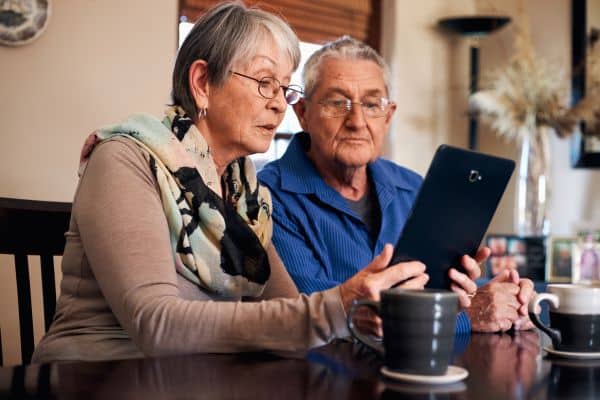 Rick Wigginton, chief sales officer for Brookdale Senior Living, said that the emergence of tools such as ride-sharing apps, grocery and meal delivery, Amazon, emergency-response wearables and video calling platforms (including FaceTime and Zoom) have helped prompt a shift in many of today’s seniors and their adult children.
“These advances have unquestionably made life easier for many of us, but we’re recognizing that these convenience enhancements may be delaying some senior living prospects from making a move,” Wigginton said. “This shift is contributing to an older entry point into seniors housing as more believe they can stay in their current home longer, not yet fully recognizing the broader value unique to the experiences of community living.”
Still, Wigginton said while new technologies and home-based services sometimes give seniors “an illusion of security in their current home, we’ve seen that aging can be more successful in environments where people feel a sense of belonging within a community of friends and where their evolving care needs are more easily recognized and supported.”
The Boomers: Socially connected and uninterested in an ‘elderly island’
Carle said that he believes the most distinctive characteristic of today’s consumer – a group that he notes includes more than 10,000 Baby Boomers turning 79 each day – “is that they simply do not see themselves as either old, isolated or limited in the choices they can make.”
Carle said Boomers are living longer and healthier than their predecessors. In addition, he said they hold anti-ageist attitudes toward the stereotypes often associated with older adults.
“It’s also a generation that has been the most socially connected,” Carle said. “Boomers invented the large suburbs, went to large grade schools, graduated from large colleges, and went to work for large companies – all before cell phones and the internet made human interaction less necessary. They have literally never been alone, and I’m not sure would know how to be.”
Boomers are accustomed to having choices, Carle said.
‘With more than 70 million people with different preferences, Boomers have exploded the portfolio of products of every industry with which they came into contact in every decade of their lives – from Baskin Robbins ‘31 Flavors’ in the 1950s to dozens of brands of ‘blue jeans’ to makes of cars,” Carle said. “In 1985, Diet Coke became only the second ‘brand’ of Coca Cola after nearly 100 years – the first year Boomers were turning 40 and getting fat. Retailers have always known to follow this critical mass of consumers and expand their product offerings.”
Carle said Boomers want to be engaged with the world around them rather than removed from it.
“The bottom line is that Boomers will, and even need to, congregate, but they will not settle for an ‘elderly island’ that separates them from the rest of society, nor for ‘vanilla’ as their only choice for senior living,” Carle said.
Carle warns that senior living operators must be wary of complacency and falling into the trap of taking the ready availability of senior living residents for granted.
“The challenge for senior living is the need to move away from the idea that all providers have to do is wait for millions of Boomers to reach the traditional age of entry, while offering communities that all look the same and continue to require people of a certain age to be segregated from the rest of society,” Carle said. “We can see the shift in the faster lease up, fill rates and greatly expanded primary service areas of ‘niche’ communities for different cultures, orientations and interests.”
Carle believes there’s a reason that University Retirement Communities is such an increasingly popular niche in the field.
“Boomers represent the most highly educated retirement demographic in history, with URCs offering exactly the ‘active, intellectually stimulating and intergenerational’ environment they seek,” Carle said. “They are used to being catered to as consumers and will go to communities that meet them where they are at, not the other way around.”
Emphasizing wellness and prioritizing personalization
 Mary Leary, CEO and president, Mather, said today’s senior living consumers, particularly Boomers and GenXers, have a markedly different mindset compared to previous generations.
“They are driven by a desire for wellness, autonomy and personalized experiences,” Leary said. “This shift is fueled by a broader societal change in how aging is perceived, with an emphasis on living longer and healthier. We’re at an inflection point where we can either lead in supporting older adults in enhanced longevity and well span, or risk being bypassed by them altogether.”
In response to those shifts, Leary said Mather opened The Mather wellness community in Tysons, Virginia specifically targeting Boomers and GenXers – and nearly 80% of its residents come from those generations.
“Programs such as bio-optimization (AI body composition analysis) and self-guided journeys offer residents personalized pathways to enhance their physical and mental wellness, aligning with the modern consumer’s expectations for tailored wellness interventions,” Leary said.
Leary believes communities must rebrand themselves as “wellness-centric environments that actively support holistic health or well-being.”
“This shift offers immense opportunities to redefine senior living as a proactive choice rather than a last resort,” Leary said. “Mather is focused on developing wellness-focused communities that incorporate nature, sustainability/regeneration and community and are optimum places for enhancing lifespan and well span.”
Leary believes the senior living consumer mindset is only going to further evolve toward greater personalization and integration of wellness practices.
“As scientific advancements in predictive analytics and personalized wellness interventions grow, consumers will expect communities to offer tailored experiences that enhance both lifespan and health span,” Leary said. “Mather Institute’s research shows that future generations will prioritize transparency, choice, flexibility and high tech/high touch services. Future communities are going to skyrocket in terms of innovation, emphasizing the need to embrace a new generation of older adults with creative approaches to design and experience.”
The loneliness epidemic and its role in consumers’ mindsets
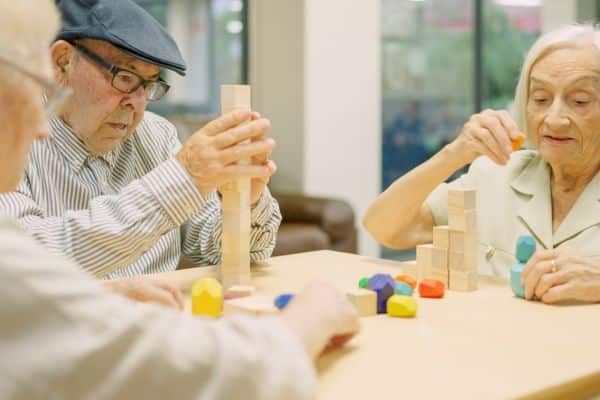 Perhaps never has the health risks of loneliness been so closely examined, particularly for older adults. Wigginton notes that there has been extensive research published about the loneliness epidemic among America’s senior population and how chronic loneliness can cause an accelerated progression of adverse health conditions and even lead to premature mortality. That helps underline the importance of senior living and the value it can provide.
For communities, it is an important time to demonstrate their value on this critical issue – one that consumers understand better than ever before.
“The best seniors housing operators are responding to this by placing a stronger emphasis on fostering meaningful personal connections,” Wigginton said. “At Brookdale, our EngagementPlus initiative reflects this shift. We’ve evolved from having activity directors to Purpose Partners, with the recognition that engaged, purposeful living strongly correlates to quality of life. By searching for innovative ways to cultivate face-to-face human interaction and meaningful friendships, we believe we are better set up to serve the needs and overall well-being of our residents.”
As the senior living demographic transitions from the last of the Depression-era babies fully into the Boomer generation, apartment features and community amenities will grow more important, Wigginton said.
“But that does not mean that the newest building will always win,” Wigginton said. “I believe that the human spirit yearns for purposefulness – we want and need to matter for as long as we live. For too long, many older adults have believed that a smaller, lonelier life is an inevitable part of aging. But in the coming years, senior living consumers will seek places where they can live better — and be less willing to settle for aging hardships that can be solved. The operators that best blend the humanity of the congregant senior living experience with the expected apartment/community amenities will have the greatest success in appealing to reluctant seniors housing consumers.”