

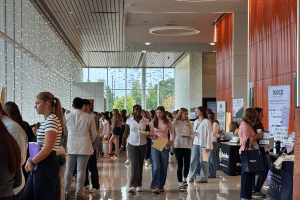
 In response to staffing challenges that an organizer called “unprecedented,” the Wisconsin Assisted Living Association recently held its first Workforce Symposium, an event designed to help tackle those challenges “head-on.”
The event in September served to offer strategies to help providers in the state evolve their staffing approach, build stronger teams and prepare for the uncertain future ahead. The senior living industry faces a growing demand for care with a workforce struggling to keep pace with 10,000 Baby Boomers turning 65 every day and up to 70% requiring long-term care.
The symposium’s audience included assisted living providers, human resources leaders, educators and partner organizations. The symposium also drew nearly 130 high school students, helping to raise awareness of assisted living as a viable career with an array of opportunities for long-term advancement.
“The blend of professionals and students created excitement and meaningful dialogue,” said Jennifer Hoffman, director of workforce development for the Wisconsin Assisted Living Association. “The enthusiasm of our members to engage with these students was exciting to see.”
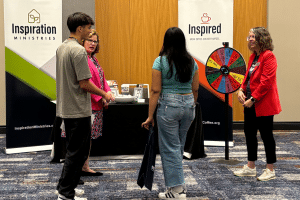 The symposium aligned with the national “Develop Our People” effort that is a key component of Argentum’s Strategic Plan. “Develop Our People” is focused on expanding the pipeline and retention of qualified and diverse talent to meet the needs of a growing senior population. With a similar approach to the event in Wisconsin, Argentum held workforce symposia over the summer with the Virginia Assisted Living Association and the NC Assisted Living Association.
Hoffman said the Wisconsin symposium arose from conversations with WALA members and providers.
“We recognized that traditional workforce strategies were no longer keeping pace with the realities of our industry,” Hoffman said.
A panel of guests opened the event with a discussion of recruitment and retention programs, resources and support available from local workforce development systems. Panelists included representatives from organizations such as the state’s Department of Workforce Development, the Bureau of Apprenticeship, Equus Workforce Solutions and Waukesha County Technical College, among others. The symposium also featured breakout sessions on rethinking talent acquisition, the onboarding experience and improving retention.
Hoffman said the focus of the symposium was intentionally twofold.
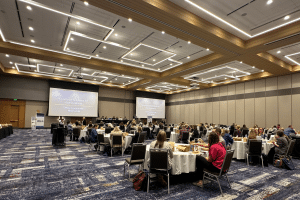 “We wanted our members to walk away with immediate strategies exploring recruitment, retention and onboarding that help providers now,” she said. “Additionally, we saw the purpose to strengthen partnerships with educational institutions and workforce agencies to build a sustainable workforce for the future.”
Hoffman said WALA employed practical takeaways but also strived to challenge those in attendance to think differently about career pathways, culture and the evolving role of caregiving in the industry.
Hoffman said the symposium served to bring together critical stakeholders into a shared conversation – providers, workforce agencies and future job seekers.
“There is no single thing that will solve the workforce crisis within our industry,” Hoffman said. “It begins with awareness, and I would say we met the goal of sharing the amazing pathways available to students in our industry. Additionally, members walked away with tangible tools and connections they can use immediately.”